
Digitizing Logistics: From Dispatch Chaos to Control
Manual dispatch and phone-based fleet coordination break down as delivery volume grows. Digitizing logistics gives operations teams real control.
DESNA
Logistics teams carry enormous operational weight: routes to plan, drivers to assign, deliveries to confirm, and exceptions to resolve — often before noon. When coordination happens through phone calls and paper manifests, the system works until it does not. One missed update and the entire day unravels.
The symptoms are familiar: drivers wait at depots while dispatchers scramble for information, customers call for status updates that nobody can answer quickly, and end-of-day reconciliation reveals gaps between what was planned and what was delivered.
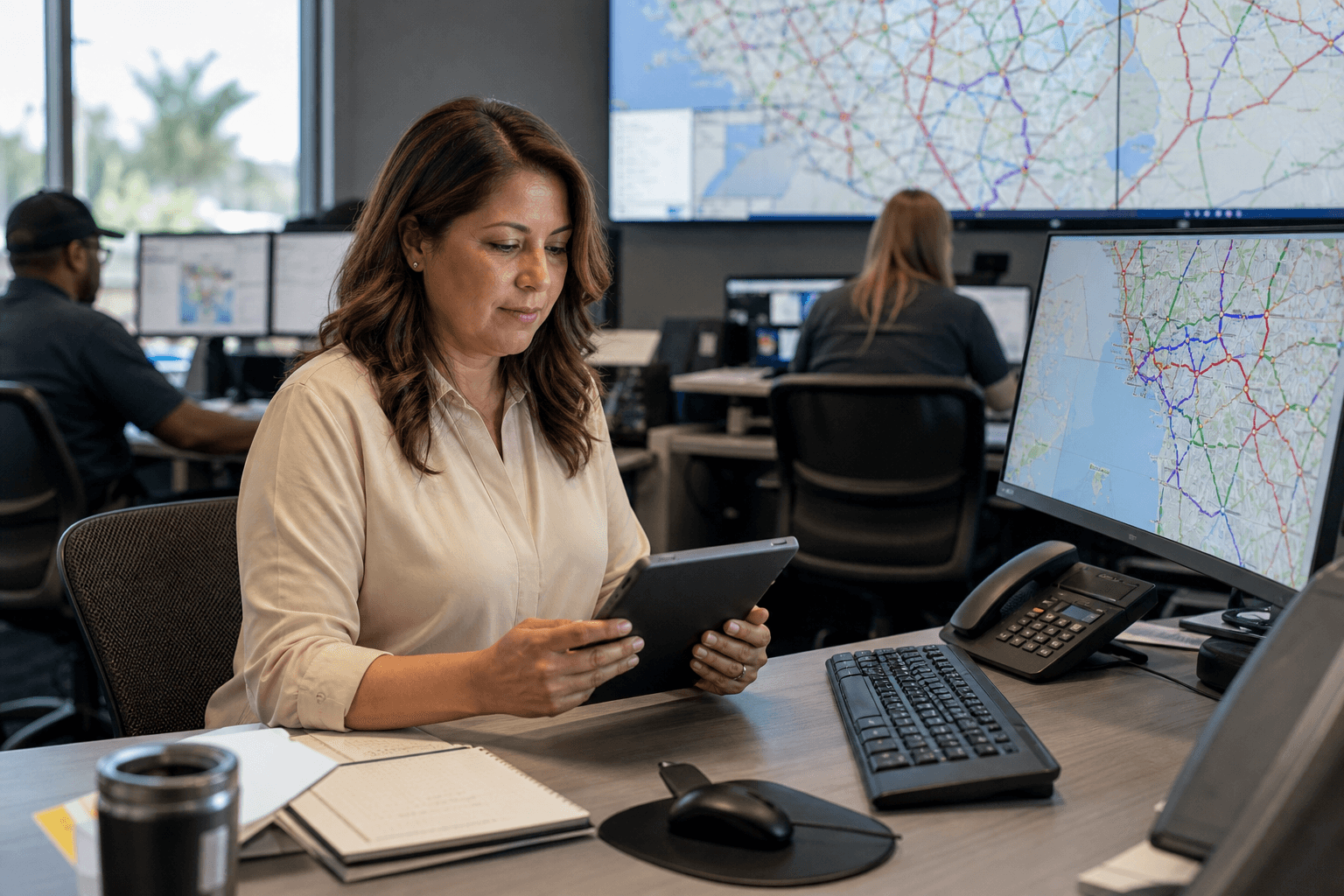
Digitizing logistics means giving dispatchers a live view of fleet status, automated route suggestions based on real constraints, and digital proof of delivery captured at the point of handoff. Drivers receive assignments on mobile devices; managers see progress on a dashboard instead of chasing phone updates.
The impact extends beyond efficiency. Accurate delivery data feeds back into inventory, billing, and customer service — eliminating the lag between what happened on the road and what the back office knows. Disputes decrease because every delivery has a timestamp, location, and signature.
Organizations that digitize dispatch typically reduce idle time, improve on-time rates, and cut the administrative overhead of manual reconciliation. The investment pays back through fewer failed deliveries and faster billing cycles.
If your fleet operations still depend on phone coordination and paper trails, there is a clearer path forward. Describe your dispatch workflow and we will show you how a logistics platform can bring order to daily operations.